What Is Flexible Packaging? Formats, Materials, and Digital Printing
Learn how flexible packaging is used, how pouches and rollstock differ, which barrier and seal questions matter, and where digital printing fits.
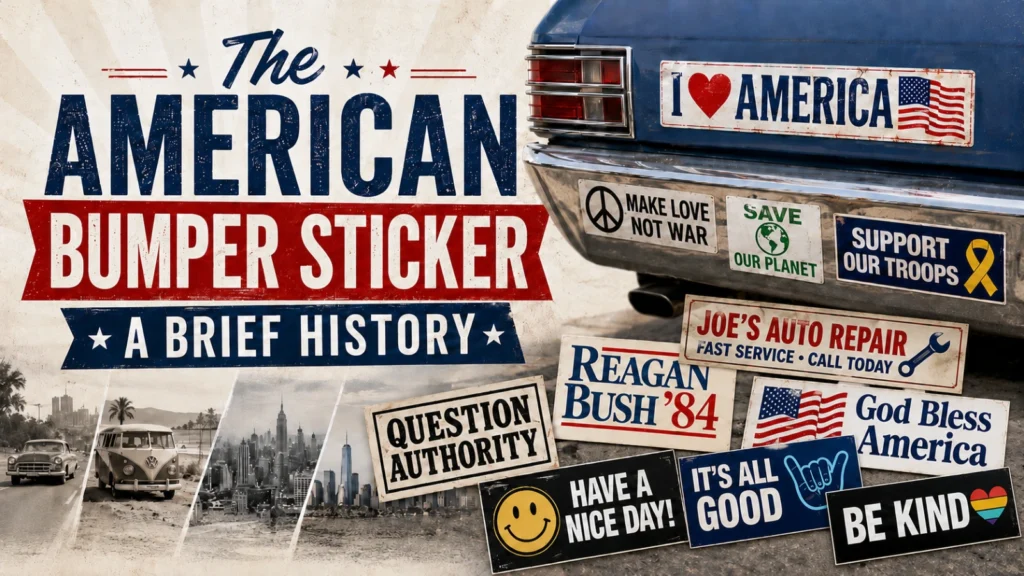
Bumper stickers are small pieces of printed material with an outsized place in American culture. They advertise local attractions, announce political views, share jokes, promote businesses, and turn ordinary vehicles into moving statements of identity.
The format feels simple today, but the bumper sticker developed alongside changes in transportation, printing, adhesives, car culture, and public expression.
Long before adhesive-backed bumper stickers became common, people used signs to communicate on the road. Early advertising messages appeared on carriage-related materials, and later on metal or cardboard signs attached to vehicles. As automobiles became part of daily life, drivers and businesses found new ways to put messages where other travelers would see them.
The modern bumper sticker became possible when manufacturing advances made pressure-sensitive adhesives, adhesive-backed paper strips, and vivid inks more practical. Forest Gill, a Kansas City silkscreen printer, is often credited with helping create the first adhesive bumper stickers using fluorescent inks and the materials that became available around the World War II era.
By the 1950s, bumper stickers were widely used to promote tourist attractions. Places such as Rock City in Lookout Mountain, Georgia became closely associated with vehicle-based advertising. Around the same period, political bumper stickers became part of American campaign culture. The 1952 Dwight D. Eisenhower campaign helped popularize political messages on cars with the memorable “I Like Ike” slogan.
Since then, bumper stickers have become a daily form of public speech. They can be funny, commercial, philosophical, patriotic, local, provocative, or deeply personal. A car bumper is not a formal media channel, but it is visible in traffic, parking lots, and neighborhoods — which is exactly why the format endured.
Bumper stickers have even appeared in First Amendment conversations. Court cases in the early 1990s addressed whether profane bumper-sticker language could be protected expression, reinforcing how a simple adhesive message can intersect with larger questions about speech.
Before modern pressure-sensitive stickers, drivers and businesses used signs, banners, and placards attached to vehicles. The postwar spread of automobiles, tourism, screen printing, brighter inks, and practical adhesive-backed materials helped turn the bumper into a mobile display. The original Arrow article credits printer Forest Gill as an important figure in popularizing the modern format; that attribution is preserved as historical source context rather than presented as the only possible origin story.
Destination promotions made cars moving advertisements, while campaigns used bumper stickers as compact statements of support. The original source cites Rock City promotions and the 1952 “I Like Ike” campaign as examples. Over time, businesses, schools, bands, causes, and individuals adopted the same format. That range explains why a bumper sticker can work as both mass-produced advertising and personal expression.
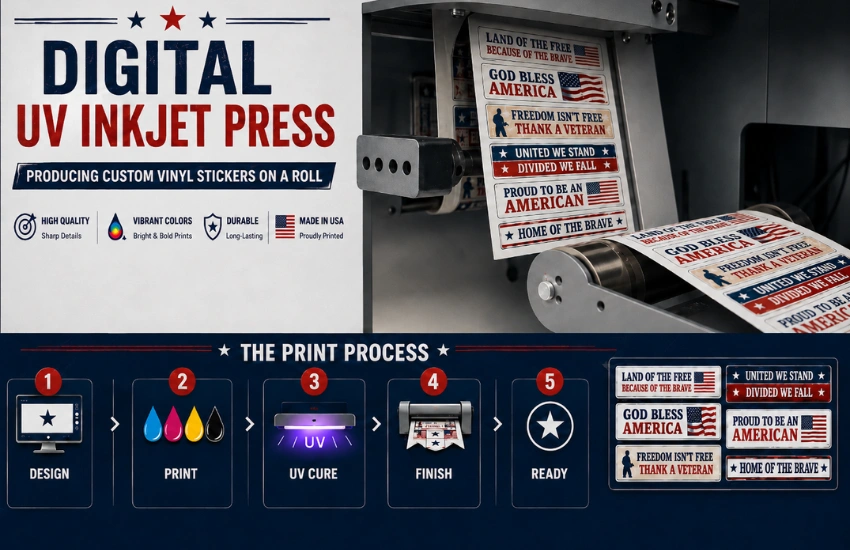
A vehicle graphic needs more than a strong message. Designers must consider readable type, viewing distance, color contrast, weather, sunlight, car-wash exposure, adhesive strength, clean removal, and local restrictions. Printers should test the selected material and ink on representative surfaces and avoid claiming universal durability. Modern digital production supports short runs and versioning, while finishing determines the final shape and roll or sheet format.
Turn broad expectations into checks an operator can repeat. An approval record should identify the artwork version, dimensions, approved material, print settings, color reference, required readable text, barcode or code grade where applicable, finishing path, roll direction, core and roll limits, and the defects that require a stop or hold. Include representative photos or retained samples when visual judgment matters. Assign who may approve a first article and who may authorize a material, file, or process substitution.
Then test the job at the points where risk enters: file intake, first print, after a roll change, after finishing, and after realistic application or handling. Sample across the web and over the run rather than checking one convenient label. Record failures and corrective actions in the job history. This discipline helps teams distinguish a design problem from a media, printer, finishing, or application problem and prevents an unreviewed change from becoming the new standard.
| Review area | Questions to document |
|---|---|
| Application | What must the label communicate, survive, and fit? |
| Materials | Which facestock, adhesive, liner, ink or toner, and coating are approved? |
| Production | What are typical and peak volumes, changeovers, roll formats, and acceptance criteria? |
| Finishing | How will labels be cut, inspected, stripped, slit, rewound, packed, or applied? |
| Validation | Who approves samples, records settings, controls changes, and handles failures? |
For current planning, review current digital label printer options, label finishing systems, label materials and application support. Verify the exact configuration, material, and application rather than relying on a category name alone.
The original Arrow article credits printer Forest Gill with an important role in popularizing the adhesive-backed format; origin accounts can vary.
They became especially visible in postwar tourism and political promotion as car ownership and pressure-sensitive printing expanded.
No. They also promote destinations, schools, businesses, bands, causes, humor, and personal identity.
Durability depends on facestock, ink, coating, adhesive, surface preparation, weather, sunlight, and exposure.
Digital printing and finishing can support short, versioned runs when material and application requirements are validated.
Talk with Arrow Systems about your application, materials, production goals, and the equipment options that may fit.

Learn how flexible packaging is used, how pouches and rollstock differ, which barrier and seal questions matter, and where digital printing fits.

Compare laser and analog label finishing by tooling, changeovers, materials, run length, quality, workflow, and total cost before selecting equipment.

Table of Contents Arrow Systems to Exhibit at LOUPE Americas 2026 Chicago, IL — Arrow Systems Inc. will exhibit at LOUPE Americas 2026, taking place

Table of Contents Overlaminate vs. Varnish Labels: How to Choose Protection Film overlaminate protects against immersion, wash-down, and solvents; UV and aqueous varnish suit retail

Table of Contents Digital Label Printers for Stickers and Labels: How to Choose the Right Press The right printer for stickers and labels depends on

Table of Contents Blade vs. Laser Label Die Cutting: Accuracy, Speed, and Cost per Label Blade die-cutting suits simple shapes and long runs; CO2 laser